

Not everyone is a ‘numbers person’ so the idea of signing up for Google Analytics (GA) might send you into a flashback of your high school Calculus tests. Don’t worry! This article will help you to decipher the important information provided by Google Analytics and how it could help your business.
Understanding how people interact with your website will tell you a lot about how you can improve it.
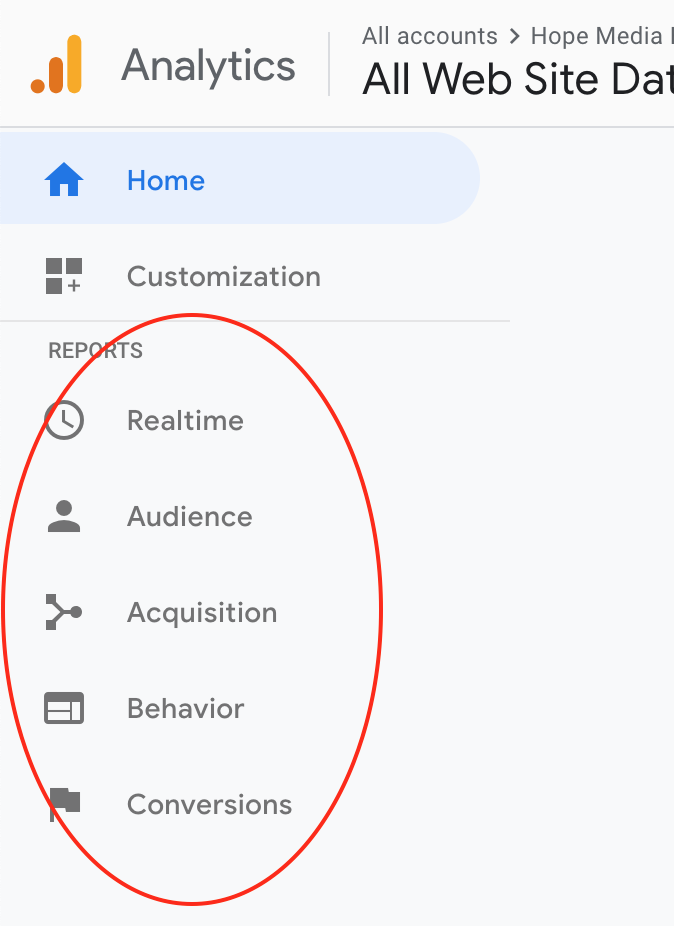
- Realtime
What are people doing on your website right now. - Audience
Who are these people visiting your site. - Acquisition
How are people finding your website? - Behaviour
What exactly are they doing on your website. - Conversions
Are people doing what you’d like on your website.
Each of these reports provide you with valuable information which we will outline further below.
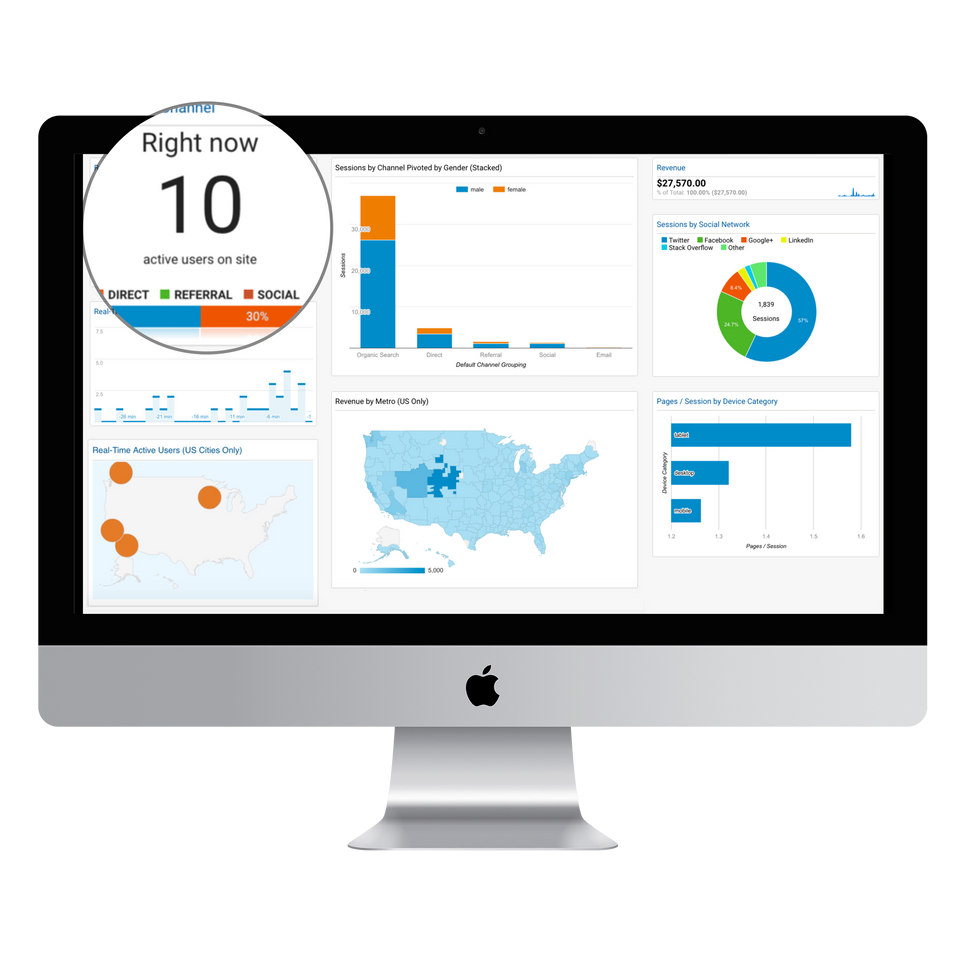
Realtime reporting is a fun area of GA. You can see the exact number of people on your site at that exact moment – FUN!
Learning who exactly is coming to your website will give you better insight into who you should be marketing your services or products towards.
- Location
Where your visitors are from. You can drill down from country, to region and right down to city or neighbourhood. This can tell you if your new marketing initiative in a new city is working, or if it’s time to expand to a market that you may have overlooked. - Device type
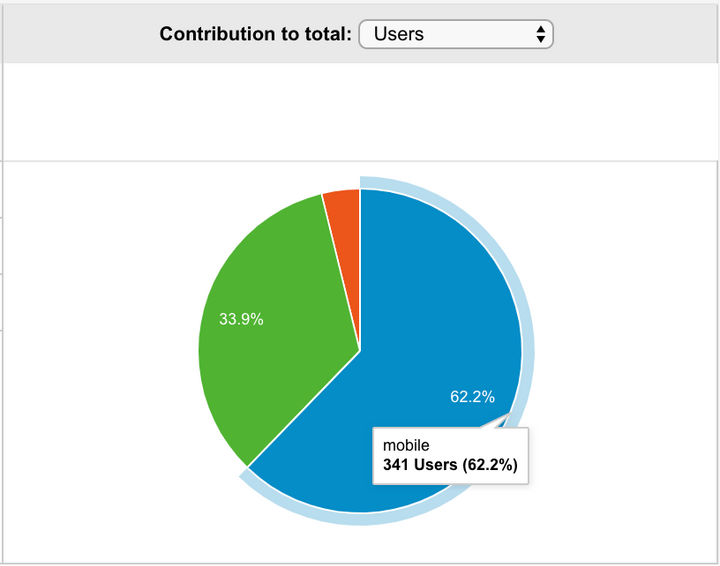
Is the majority of your audience using their desktop or laptop, or are they using their smart-phone? Did you know smartphone use is increasing to become the norm. This means you should ensure your site is responsive – meaning it looks as great on a phone as it does on your computer. - New Users vs. Returning
Does your audience keep coming back to your site, or are they stopping in once to return. Returning visitors signal to you that your site’s messaging is resonating with them, or your products or services are being considered by them. A high percentage of returning users is a great sign that your website is providing the information that they are looking for. - Interests
What else does your audience look up online? If you are finding that a majority of your audience is interested in a product or service similar to yours, then you can likely assume you are marketing your product accurately. But on the other hand, if you find that a majority of your audience is interested in completely different realm, then you might have a case of mixed-messaging occurring in how you are marketing yourself. - Demographics
How old is your audience? Are you finding your target demographic isn’t being matched by the people visiting your site? What gender are they? This information is all available on GA.
So we have learned who our audience is next, let’s figure out how exactly they showed up on your website.
GA will split your Acquisitions into channels:
- Organic Search: People ‘googling’ something and ending up on your website
- Paid Search: People ‘googling’ something and seeing an ad you are paying for, then ending up on your site.
- Direct: People who either typed your website’s URL into their address bar, or have saved your website to a bookmark.
- Social: People who came upon your website via a social media network, like Facebook, Twitter, Instagram or many others.
- Referrals: People who used a link from another website to find yours. This could be a partner site who has your logo on it, a review from the newspaper or anywhere you could be listed.
- Other: You guessed it – any other type of user who visited your site. These can include UTM-coded campaigns (more on UTM code are here).
You can further drill down each of these Acquisition channels, providing you with insight into how valuable each type is. For example, you might be receiving a majority of your visitors from your social media accounts which is great. But if you notice that only 1% of of your social visitors are purchasing or contacting you then you can consider how you are marketing your business on social media.
Once someone lands on your website, GA instantly records this visit and will continue to record everything they do while interacting with your site. You can learn how your site is functioning and what is resonating with your audience from this data.
Here are some data points you will want to keep an eye on and why:
- Average Time Spent on Site
If people are only spending a couple of seconds on your site, you obviously have a problem. Maybe your site just doesn’t match what they were looking for. Or your layout is confusing or overwhelming. Another common issue is someone may just not know what your site is about. It’s critically important to make it very clear what your service or product is right away. Studies show that you have roughly 15 seconds to get your point across online before a visitor leaves. - Bounce Rate
This is common piece of GA jargon, but it essentially means the percentage of people who visit just a single page of your website. It generally signals that people are landing on your site and aren’t interested in learning more about your business. But there are flaws in this theory – what if they simply found exactly what they were looking for, like your stores hours, your phone number or the address. - Site Content
What pages or areas of your site are people most interested in. If you find that your visitors are most interested in your businesses portfolio, then you may want to consider highlighting this page over another section. - Behavior Flow
This section of GA will tell you exactly how people are navigating through your site. Are they landing on your home page, then heading to your About page, then Services and finally the Store. Or are they skipping all those steps and heading directly to your Store? You can also discover areas which your visitors are finding confusing. If your site’s goal is to generate sales, or leads, then you will want to make sure the fewest steps possible are required to get to the Store or Contact page.
How to Set up a Google Analytics Account
Getting Google Analytics setup on your business’ website isn’t as complicated as you might think. It’s free too.
Visit their site here to get started.
- Test What Works Start on small targets and goals and see what happens when you make adjustments to your site or your marketing plans. You can find out what works, and just as importantly, what doesn’t.
- Don’t Go Crazy. GA provides you with so much information and data that it’s easy to become overwhelmed. Understand that you don’t need to use all the tools provided immediately (or perhaps even ever). Use the tools and reports that you have an understanding of. If you find that there is still too much going on, there are many resources available online, or with Hope Media House. We would be happy to help you out with anything you might have on Google Analytics ! Let us know if you need a hand below: